Last updated: 2026-08-26
The machine can hold the needle
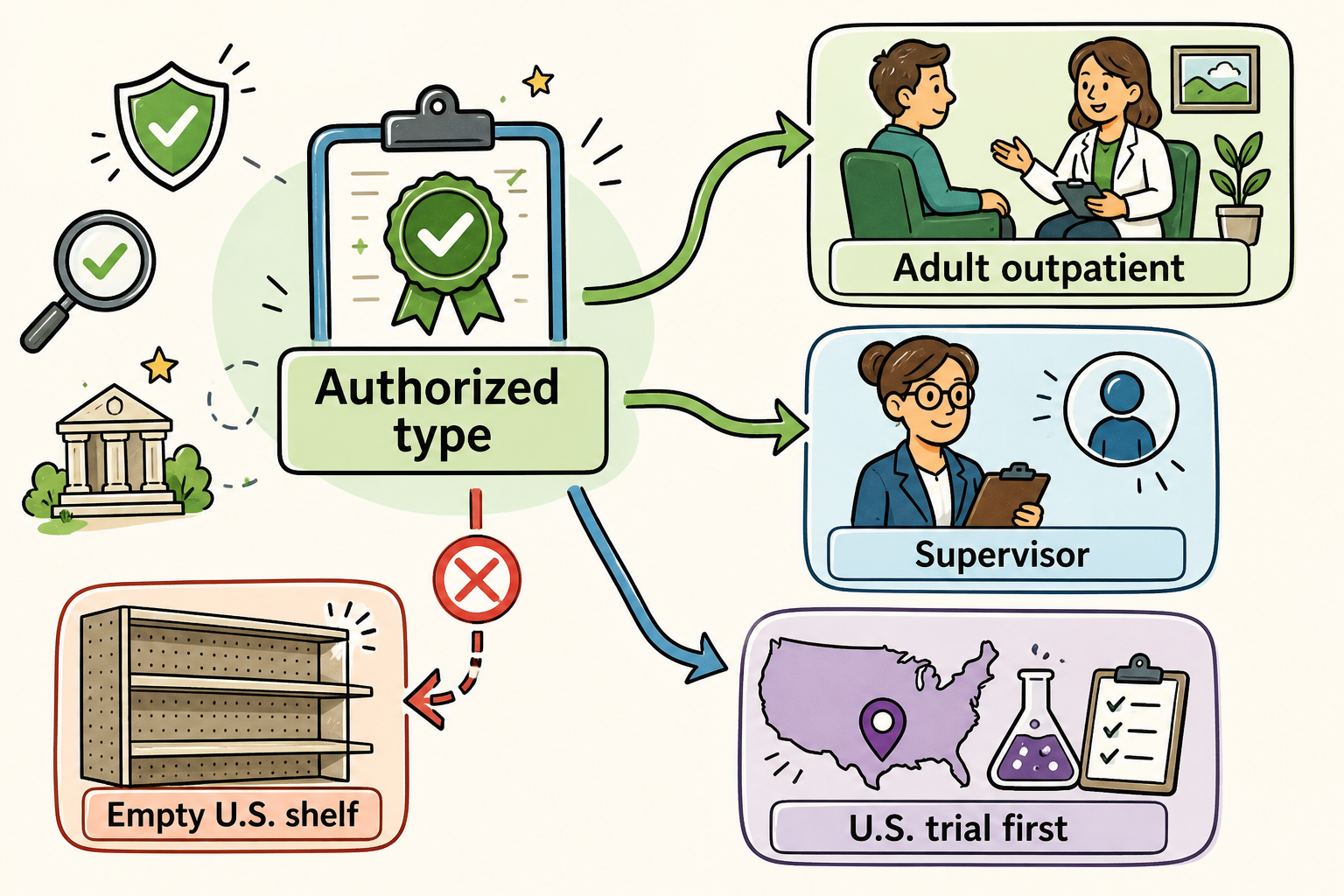
A clinic can draw blood from a vein in an adult arm without a person holding the needle. On 19 August 2026 the U.S. Food and Drug Administration authorized a new device type that can do that, after a trained person starts the session and stays. The company announced it the next day. That is a new allowed type. It is not a product sitting on a U.S. shelf. Europe already had a commercial door in 2024. A U.S. trial is still planned before U.S. commercial use. This was not the first time a machine tried a human arm.
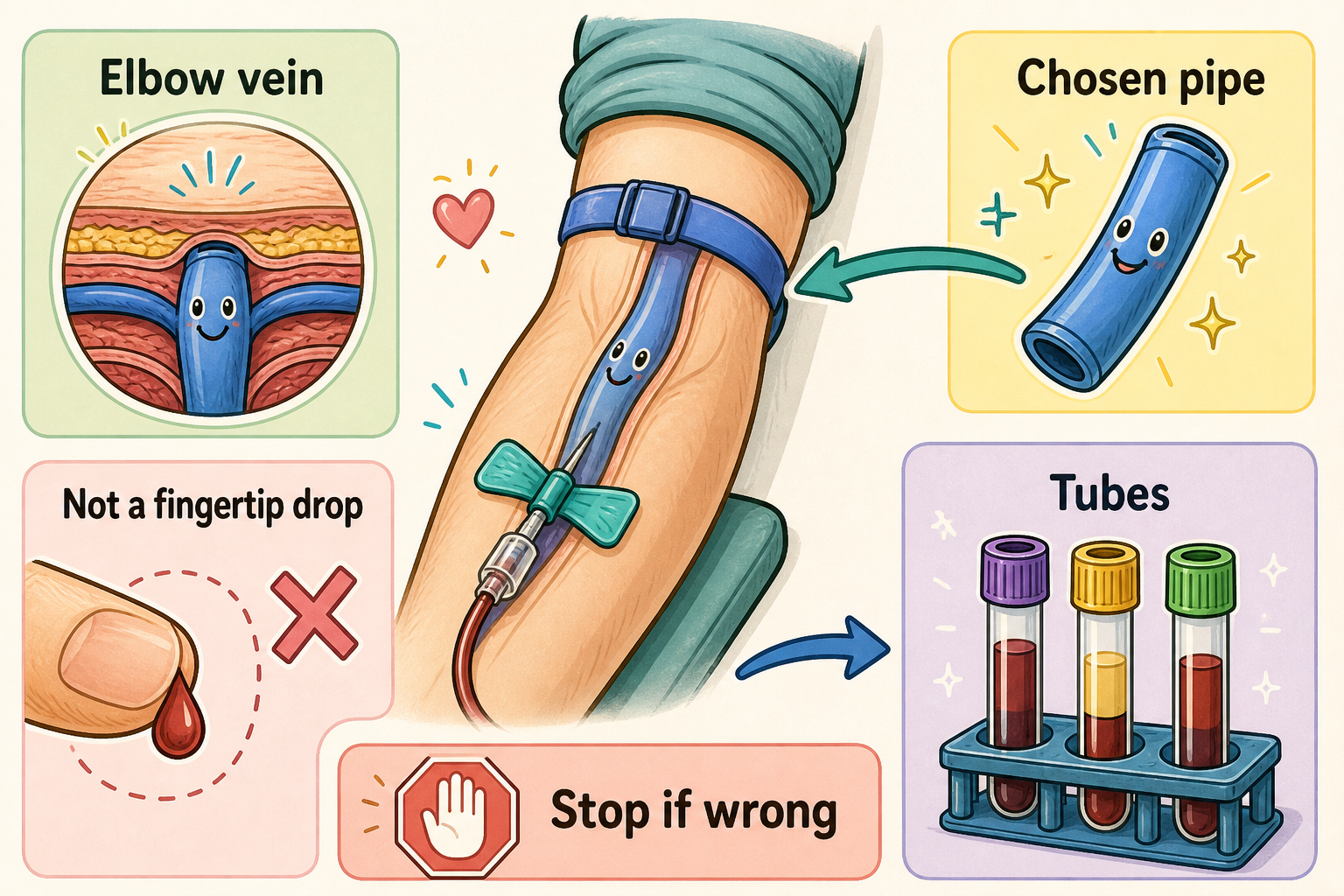
What happened
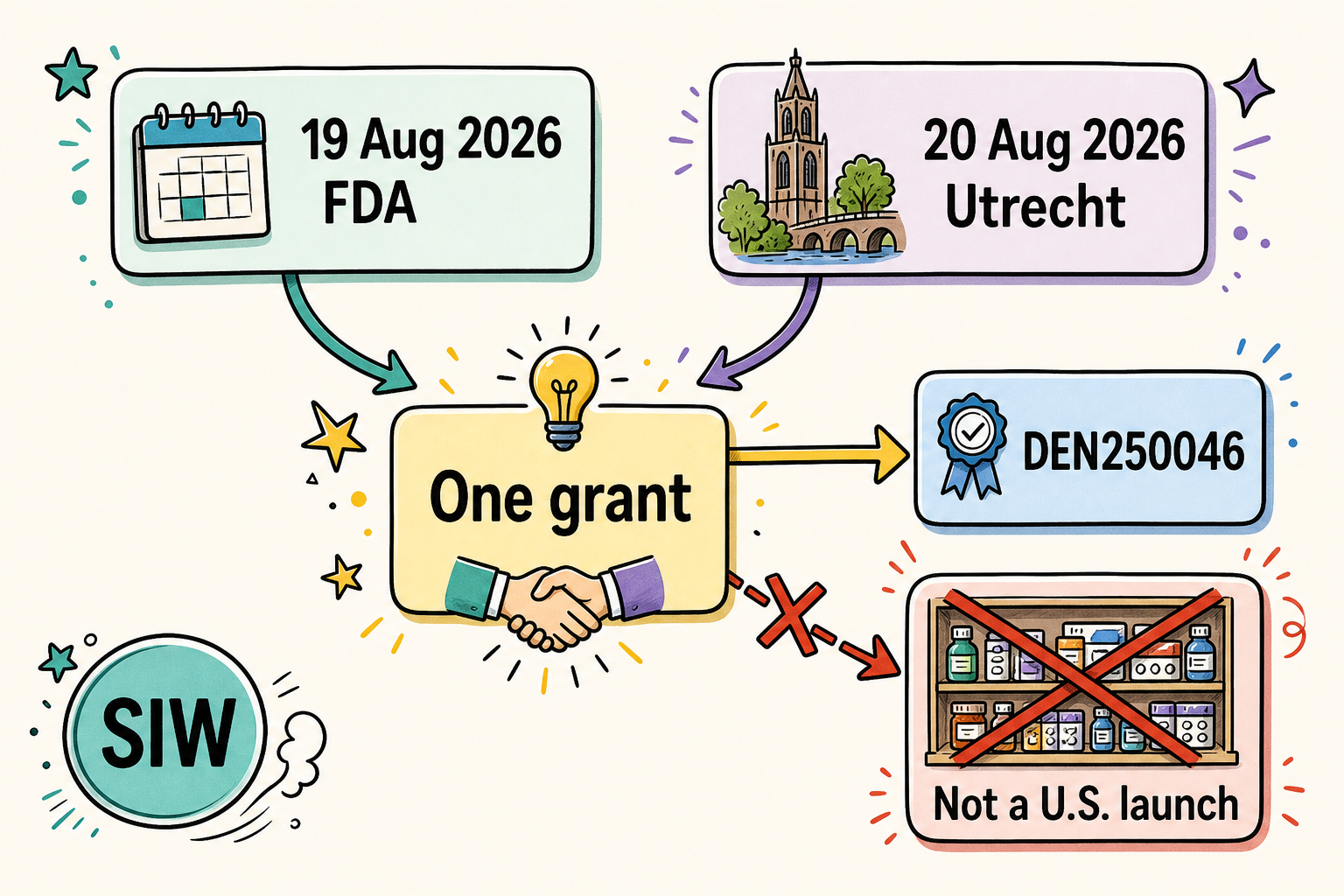
On 19 August 2026, FDA granted De Novo authorization for a standalone robotic blood-draw device. The public record is DEN250046. The product code is SIW. The listed name is Aletta Autonomous Robotic Phlebotomy Device (Gen1 US). The requester is Vitestro, in Utrecht. FDA received the request on 26 September 2025.
On 20 August 2026, Vitestro published the news from Utrecht. One grant. Two datelines. Not a U.S. launch day.
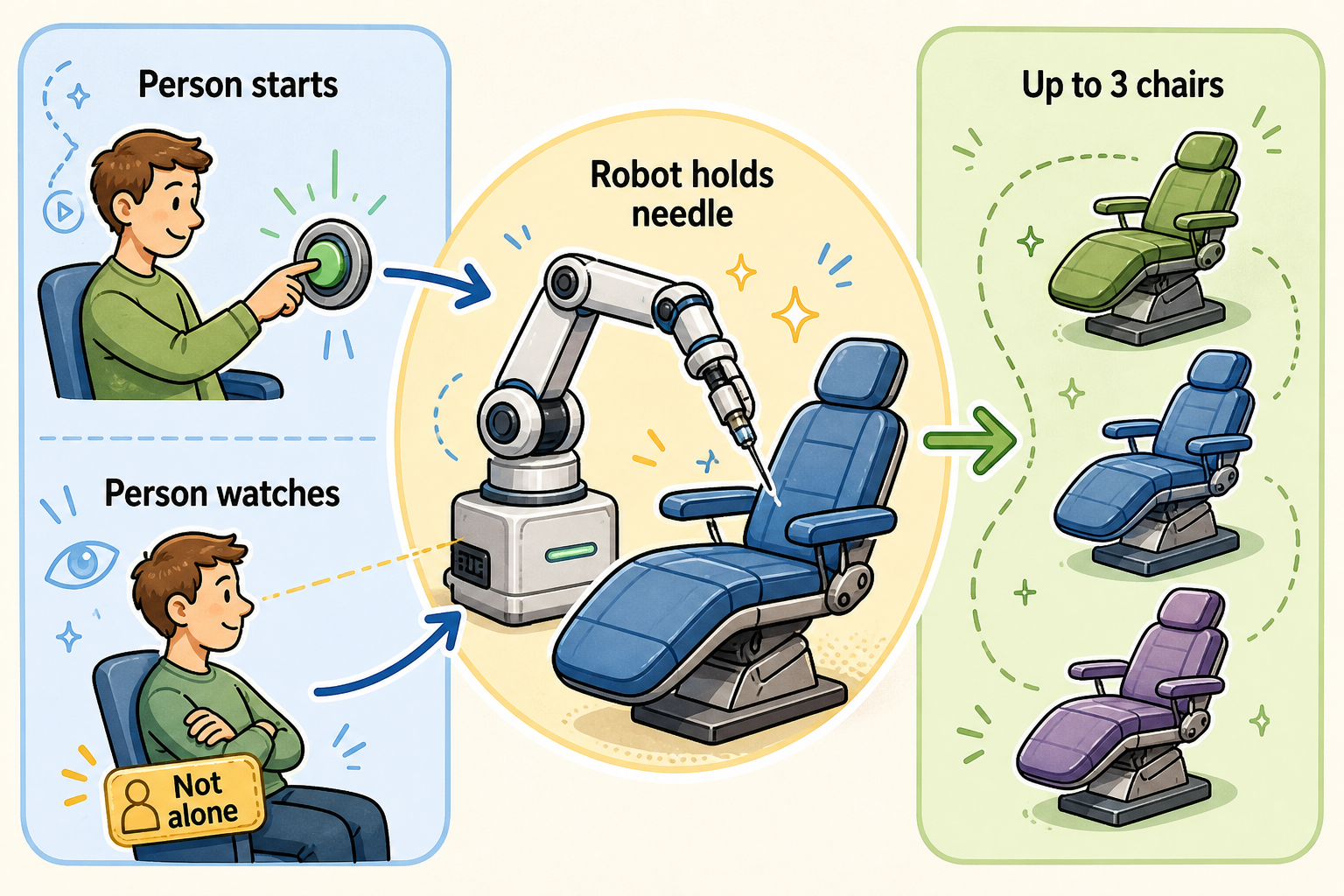
FDA-attributed text says the device is the first standalone robot that can draw blood from a patient arm without hands-on operator intervention. It is for adults in outpatient settings. A supervisor trained in drawing blood must start each session and stay available. One such person can oversee up to three devices. Near-infrared light and Doppler ultrasound help find a vein and tell arteries apart. If no good vein is found, the device will not try. Then it can apply a tourniquet, clean the skin, insert and throw away the needle, change tubes, and place a bandage. The supervisor still checks tube order and fill. If the patient moves too much, the needle detaches and the draw stops.
FDA did not publish a U.S. success-rate percentage. A 2026 Europe paper reported 94.5 percent first-stick success when a vein was identified (1,633 people). That number belongs to Europe, not to the U.S. file.
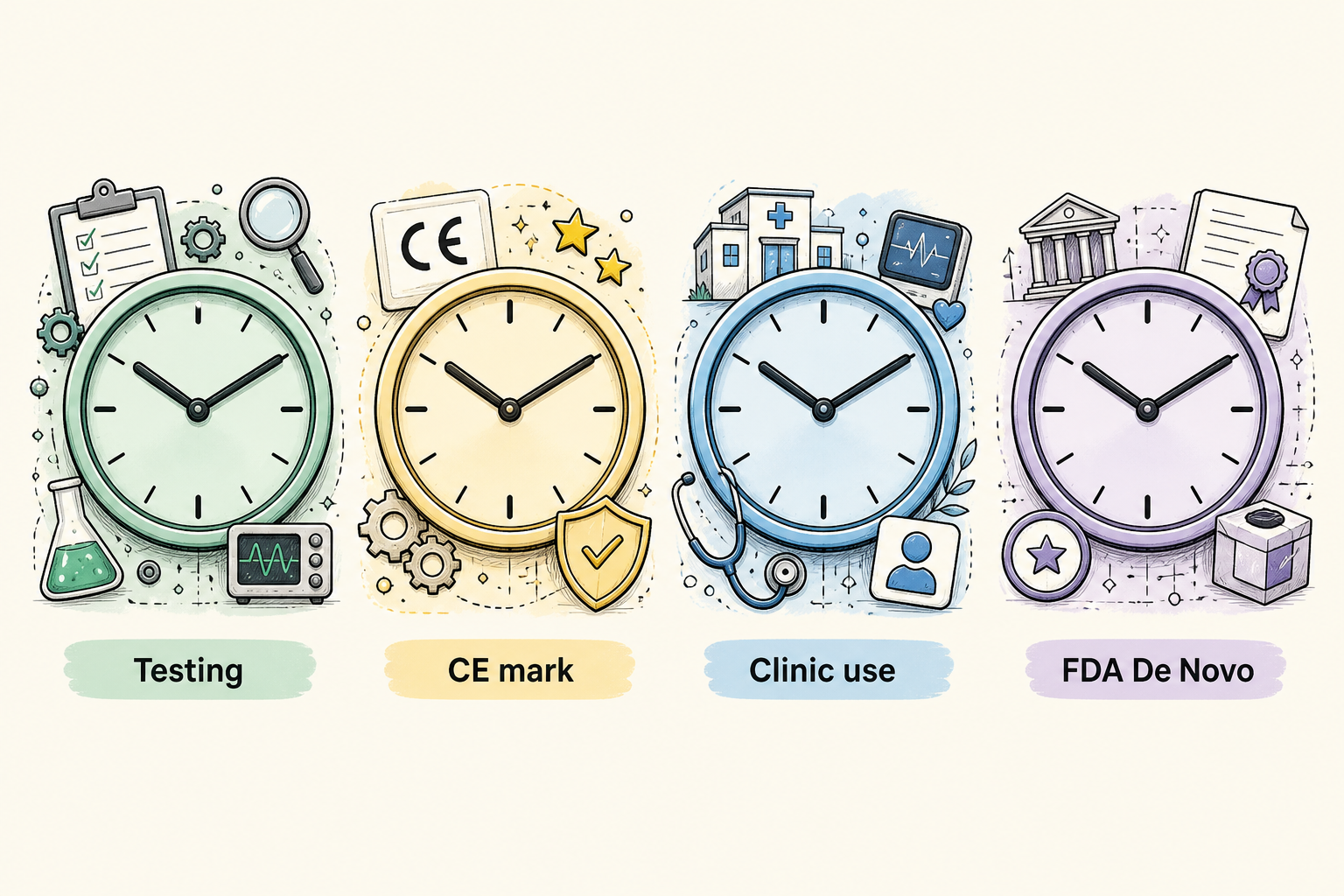
Keep four clocks apart. Early human testing is older than this week: a registered Europe trial (ADOPT, NCT05878483) started 21 July 2023 and is still recruiting. The European CE mark came in July 2024 (announced 28 August 2024). Clinic and pre-commercial use in Europe is a mixed record; do not invent how many chairs are live. The U.S. event of 19 August 2026 is De Novo for a new type. Vitestro said a U.S. multicenter trial comes before U.S. commercial availability, and that Europe is first commercially.
The one idea
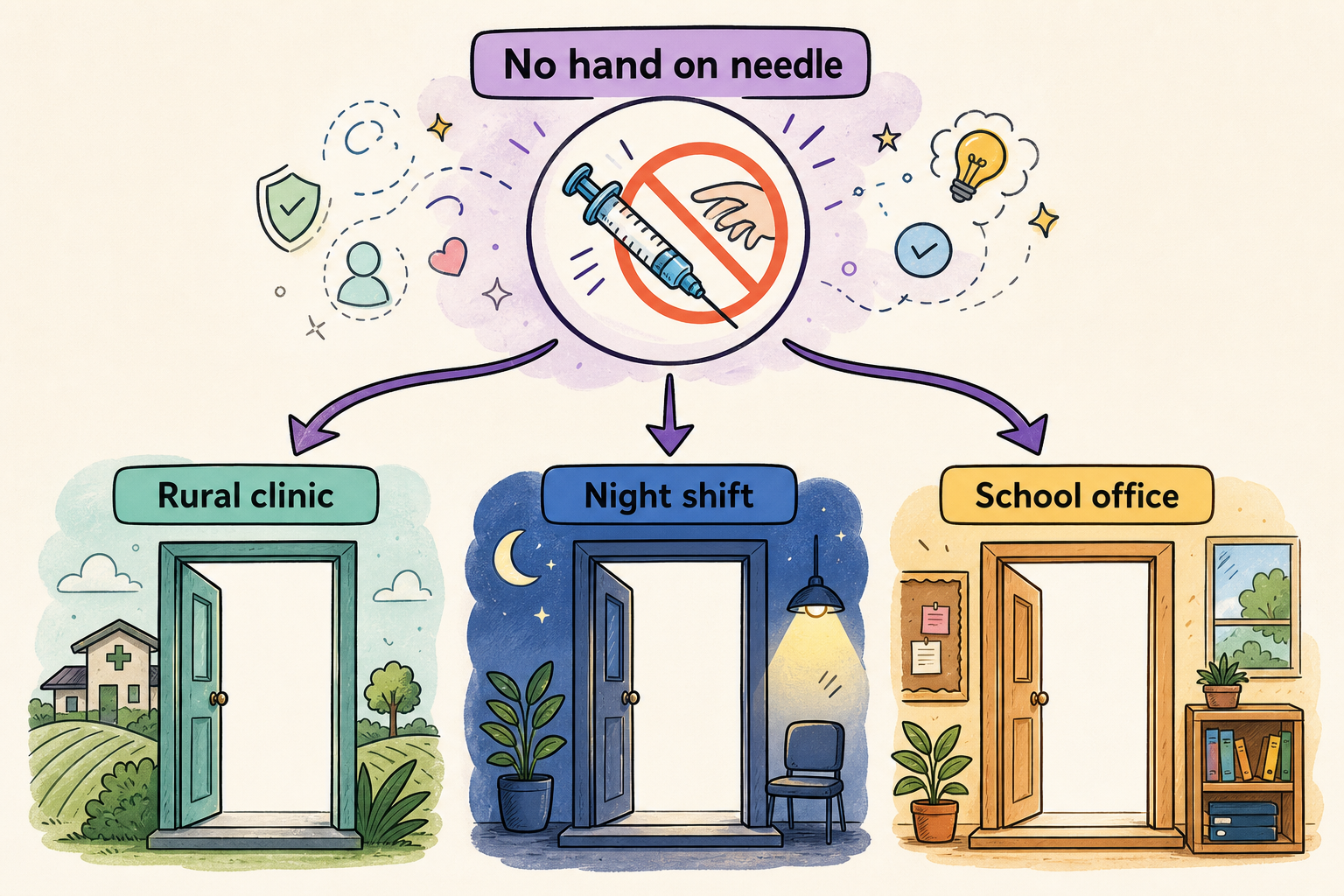
A clinic can draw venous blood without a human hand on the needle. That is now an allowed U.S. type. It is not a chair you can buy for a U.S. room tomorrow.
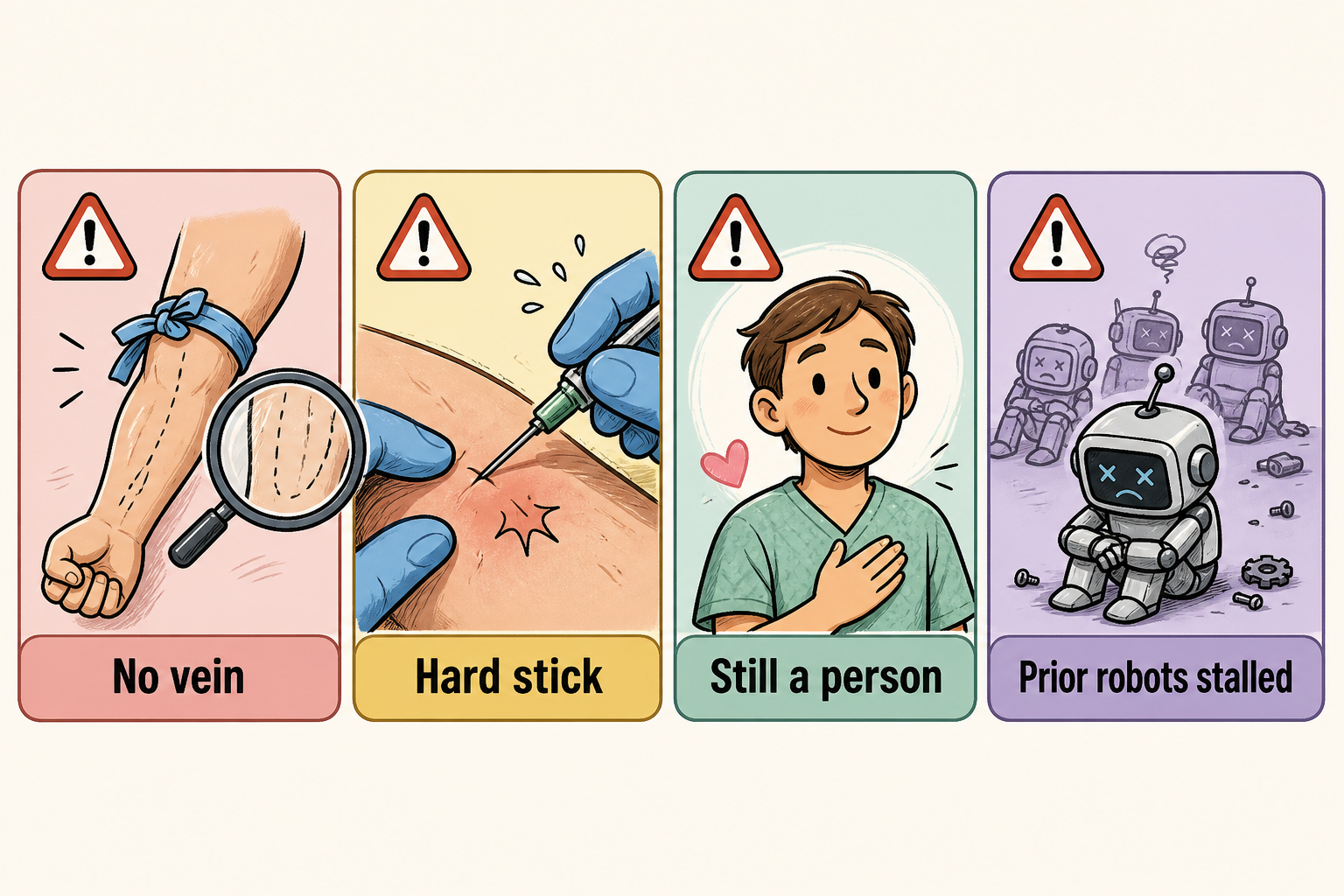
The machine holds the needle. A trained person still starts the session and stays. Imaging can refuse to poke. One person can watch more than one chair. Hard sticks still bounce back to a human. Follow those facts. Learn the class — a supervised machine-held venous draw — not a brand name.
Honest limits
- New U.S. device type (De Novo DEN250046, SIW). Not a U.S. shelf product.
- Adults. Outpatient. A trained supervisor starts the session and stays. Up to three devices.
- If no suitable vein, no stick.
- Not first-in-human. ADOPT started 21 July 2023.
- Not the CE mark. That was July 2024.
- Europe first commercially, on the 20 August 2026 company sentence. No published count of paying routine-care sites here.
- U.S. multicenter trial planned before U.S. commercial use. No U.S. trial registry number found in the 26 August 2026 research pass.
- 94.5 percent first-stick (when a vein was found) is the Europe paper, not an FDA U.S. figure.
- Not unsupervised. Not a child's authorization. Not an emergency-department authorization.
Sources
- FDA De Novo DEN250046: https://www.accessdata.fda.gov/scripts/cdrh/cfdocs/cfpmn/denovo.cfm?ID=DEN250046
- FDA-attributed text, 19 August 2026 (BioSpace reprint of GlobeNewswire): https://www.biospace.com/press-releases/fda-authorizes-first-of-its-kind-robotic-blood-draw-device
- Vitestro, 20 August 2026: https://vitestro.com/news/vitestro-receives-fda-de-novo-authorization-for-aletta/
- Vitestro, 28 August 2024 (CE in July 2024): https://vitestro.com/news/vitestro-achieves-ce-marking-for-autonomous-blood-drawing-device/
- ClinicalTrials.gov NCT05878483 (ADOPT): https://clinicaltrials.gov/study/NCT05878483
- Giesen et al., Clinical Chemistry 2026: https://doi.org/10.1093/clinchem/hvag029
Try inventing
Warmer Sun is where people come to follow, understand, and learn — not a lab. If you can restate the difference — a machine can hold the needle, and that is not a U.S. chair on a shelf — you understand the week.
You can try inventing with this at https://warmersun.com/forge. No account. No card. Just try it.